
The truth is that a website should be simple to use but it shouldn’t be simple in its thinking. A site that’s quick and cheap to produce rarely does the job you need it to do, and the difference between the two is where businesses lose enquiries without ever knowing.
What does a “simple website” actually mean?
Usually, it means one of two things:
- Simple to use
The site is clear, fast, easy to navigate, obvious what to do next. This is what every good website should be. - Simple to build
Minimal effort, minimal cost, minimal thought. This is where the trouble starts.
A well-crafted site often feels effortless to the visitor precisely because of all the careful work has gone into creating it however this perceived simplicity is often the result of deliberate design, considered copy and professional development.
When a small website is the right fit
In many cases a small website is all that needed. Plenty of businesses and organisations are best served by a minimal site with a handful of pages (a suitable example of which is Golf Fit website we created). Some audiences already know who you are and what you do, they just need to find a phone number, an address or an email.
The question isn’t how big the site should be, it’s what the site needs to achieve and whether whatever you build will achieve it.
What is the purpose of your website?
Every website has goals but what it needs to do to achieve those goals varies with them.
Some sites serve people who already know you whilst others compete for a visitor’s attention against similar businesses. Theses sites must assure that visitors are in the right place for what they are looking for then convince them to act, whether that’s to call you, complete a form or buy something.
For any of that to happen, it’s not enough for your site to simply exist. It needs to convey the right impression, say the right things, and be easy to use. In short, it needs to meet your goals.
What damage can a cheap, quick site do to your business?
A visitor arriving at a website with poorly-written copy, bloated and messy code, and delivering a frustrating user experience is like walking up to a restaurant that looks something like this:

You can probably still get your pizza, and it might even taste great, but would you even step inside if this was your first impression?
What are some common problems with a poorly-built site?
- Slow loading: heavy templates and bloated code make pages sluggish, particularly on mobile connections.
- Poor mobile experience: layouts resize awkwardly, if at all, on devices such as a mobile phone.
- Weak search visibility: sites which aren’t structured for search engines or AI bots are harder to find and their content harder to understand therefore you simply don’t rank as well.
- Accessibility gaps: sites that visitors with forms of visual impairment can’t use properly, which loses business and can create compliance risk.
- Generic or unclear copy: wording that doesn’t say what you do, who for, or why you’re the right choice.
- Difficulty moving later: some website builders make it awkward, if not outright impossible, to take your site elsewhere when you outgrow them.
We have been approached countless times by people who have tried to build a site themselves or gone the cheap route, only to be faced with problems such as those mentioned above or worse. Take for example Brian from Fortress One for whom we created a site to replace one which had been built for a family member and which subsequently gave him a solid platform for the SEO campaign he was about to start.
Compare that with a site where the copy says what it needs to say, the experience is positive regadless of device and the site overall properly reflects the impression you want to give:
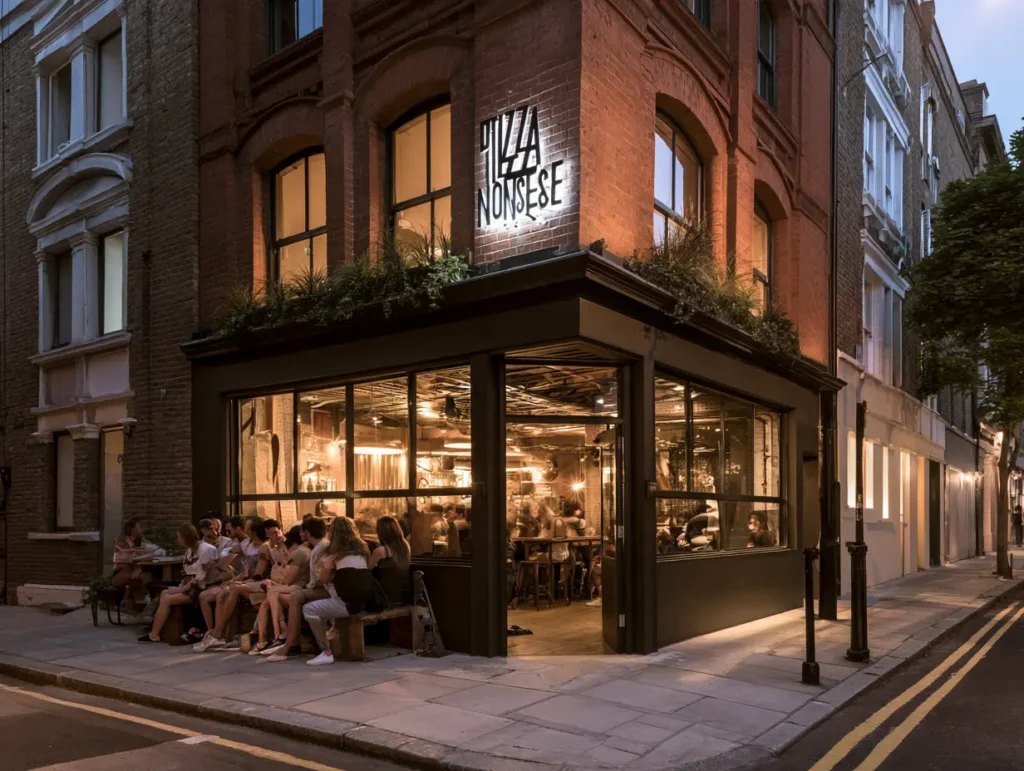
Now ask yourself this simple question – which of these two restaurants would you rather visit?
What about AI tools, website builders and cheap developers?
These tools absolutely have their place and are a suitable option for a select few. AI tools, builders such as Squarespace, Wix or IONOS and low-cost freelancers can get something online quickly, which is useful for a side project, a temporary presence or a very early-stage idea.
The problem is that they’re built to get you website done quickly, not well. They can’t tell you what your customers are searching for, what your competitors are doing better, or what your homepage should say to turn a visitor into an enquiry. That thinking is the valuable part, and it’s often completely neglected.
What does a well-built “simple” website include?
Simple in scope doesn’t mean cutting the things that matter:
- A clear message that says what you do, and for whom, within seconds
- Fast, clean, well-structured code
- A layout that works properly on every screen size
- Copy written to persuade, not just to fill space
- Sensible search foundations: page titles, headings, descriptions and structure
- Accessibility built in, not bolted on
- An obvious next step for the visitor
- A site which is able to grow and flex as your needs do
Your website is an opportunity – not an obligation
Your website is your digital storefront. Even if your business offers a genuinely excellent service, if nobody steps inside you’ve lost their business, possibly without ever knowing.
The best-performing sites aren’t treated as something you have to have. They’re an opportunity to make sure people not only walk in but stay for a tasty slice of margherita!
Common questions
It can be, provided “simple” refers to how easy the site is to use rather than how little thought went into it. A small site with clear messaging, fast performance and an obvious call to action can outperform a larger, poorly planned one.
You can, and for some situations it’s a reasonable choice. The risks are that the site may not be structured to attract search traffic or convert visitors, and that moving away later can be difficult. If your website is a significant source of enquiries, it’s worth getting professional input on the goals and structure before you build.
AI tools can produce a functional first draft quickly. What they can’t do is understand your customers, your competitors or your commercial goals, or take responsibility for performance, accessibility and long-term maintenance. Used alone, they tend to produce something generic.
Rebuilding it. A site that doesn’t generate enquiries, is slow, or can’t be developed further often ends up being replaced, so you pay twice, and lose business in between.
Ask whether it’s bringing in the calls, form submissions or sales you expect, whether it loads quickly on your phone, and whether visitors can find what they need without effort. If you’re unsure, that’s a sign it needs a review.